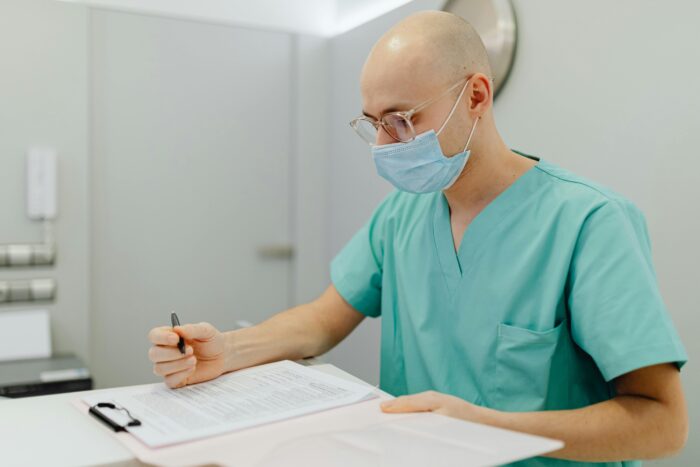


If you’re planning to become a medical assistant in California, it’s important to understand the state’s training requirements, certification pathways, scope-of-practice rules, and legal regulations. California does not license medical assistants, but the state does clearly regulate how MAs must be trained, supervised, and delegated tasks under the California Medical Board and Business & Professions Code §§2069–2071.
Whether you’re starting a new career or transitioning from another healthcare role, this guide covers everything you need to succeed — including California-specific laws, required documentation, allowed duties, certification options, and how to become job-ready quickly.
Table of Contents
California MA Requirements at a Glance
Quick Summary:
– California does not license medical assistants
– Certification is voluntary but widely preferred by employers
– Training is required for injections, skin tests, and venipuncture
– MAs must work under physician, NP, PA, or RN supervision
– Delegation must comply with CA Business & Professions Code §§2069–2071
– Both formal education and on-the-job training are allowed
🌟 Considering an accelerated MA program in California?
Explore the Springboard Certified Medical Assistant Program, with online flexibility, hands-on externships and certification prep.
What Is the Difference Between Certification and Licensure in California?
One of the biggest misconceptions about California medical assisting is the idea of a “medical assistant license.” California does not license medical assistants. Instead, MAs work under supervision and may earn voluntary certification.
Here’s the difference:
Certification (Voluntary Credential)
- Awarded by professional boards (AAMA, NHA, AMT, CCBMA)
- Requires training + passing a certification exam
- Enhances employability and salary
- Preferred by most California employers
Licensure (Mandatory Legal Requirement)
- Issued by the state
- Legally required to practice (for professions like LVN, RN, PT, etc.)
- California does not issue MA licenses
Key takeaway:
California does not license medical assistants. Certification is optional legally — but critical for career growth.
Do Medical Assistants Need to Be Certified in California?
Short answer: No — but employers strongly prefer certification.
California state law does not require MAs to be certified. However:
- Many employers report preferring certified medical assistants, and certified MAs often earn higher wages — which suggests certification can improve job prospects.
- Many employers require certification for compliance and insurance reasons.
- Certification ensures competency and reduces employer risk.
California Medical Assistant Laws
California MA laws are governed by:
These laws define:
- Who can supervise MAs
- Which tasks require direct or general supervision
- Required training documentation
- Permitted vs prohibited clinical tasks
- Delegation rules (orders must be written, signed, and dated)
Who can supervise MAs in California?
Medical assistants may be supervised by:
- Physicians
- Physician assistants
- Nurse practitioners
- Registered nurses (with delegated authority)
Providers must give written, signed, and dated instructions for delegated procedures.
California Scope of Practice for Medical Assistants
Scope of practice defines the tasks MAs can perform legally—and which require training or supervision.
Allowed Clinical Duties
Under CA law (with proper training), MAs may:
- Take and record vital signs
- Administer intradermal, IM, and subcutaneous injections
- Perform skin tests
- Collect lab specimens
- Prepare and process lab tests
- Remove sutures and staples
- Conduct EKGs
- Assist with minor surgical procedures
- Apply and change dressings
- Prepare patients for exams
Note: Injections, venipuncture, and skin tests require documented training.
Administrative Tasks (General Supervision)
- Scheduling
- EHR updates
- Patient intake
- Billing and coding
- Insurance processing
- Answering phones
- Managing HIPAA documentation
These tasks fall under general supervision — provider available by phone/electronically.
Tasks MAs Cannot Perform in California
Medical assistants may NOT:
- Diagnose or assess patients
- Interpret test results
- Perform triage
- Start or discontinue IVs
- Administer anesthesia
- Operate independently
- Provide clinical advice requiring judgment
- Call themselves “licensed”
Training Pathways and Educational Requirements
California allows two ways to train as a medical assistant:
1. Formal Education Programs (Preferred by Employers)
Formal programs are offered at:
- Community colleges
- Career colleges
- Vocational schools
- Online providers
Program Length
| Program Type | Duration |
| Certificate | 4–9 months |
| Diploma | 9–12 months |
| Associate Degree | 18–24 months |
Typical Program Cost
$1,500–$10,000 depending on length and institution.
Coursework Includes:
- Anatomy & physiology
- Medical terminology
- Pharmacology
- Clinical procedures
- EHR & billing
- Infection control
- Medical ethics
- Clinical externship
2. On-the-Job Training (Allowed but Limited)
California permits physicians to train medical assistants directly.
Requirements:
- Training must be documented
- Signed by the supervising provider
- Include skills taught + dates
- Maintained in personnel file
Pros
- No tuition
- Immediate employment
- Practical hands-on training
Cons
- May not qualify for certification
- Can reduce job mobility
- Some employers will not accept OJT-only candidates
How to Get Certified as a Medical Assistant in California
Certification boosts credibility, pay, and opportunities.
Major Certification Boards (Comparison)
| Certification | Issuing Body | Eligibility | Cost | Renewal | Source |
| CMA (AAMA) | American Association of Medical Assistants | Graduate of CAAHEP or ABHES accredited MA program | $125 | Every 5 years | https://www.aama-ntl.org/certification/eligibility |
| RMA (AMT) | American Medical Technologists | Multiple pathways including accredited MA program, military training, or 3 years’ experience | $150 | Every 3 years | https://americanmedtech.org/medical-assistant |
| CCMA (NHA) | National Healthcareer Association | MA training program or 1 year of experience | $165 | Every 2 years | https://www.nhanow.com/certification/nha-certifications/certified-clinical-medical-assistant-(ccma) |
| NCMA (NCCT) | National Center for Competency Testing | MA training program, military experience, or 1 year experience | $119 | Annual renewal | https://www.ncctinc.com/certifications/ma |
Which Certification Is “Best” in California?
- CMA (AAMA) – Highest national recognition; strict eligibility
- CCMA (NHA) – Most flexible + fastest turnaround
- RMA (AMT) – Great for experienced candidates
- CCBMA – California-specific and accepted statewide
For most students, CCMA or CMA are the strongest choices.
Steps to Register with a California-Recognized Certification Board
1. Confirm Your Eligibility
- Check requirements
- Gather transcripts + proof of training
- Contact boards for clarification if unsure
2. Submit Application and Fees
- Application fees: $120–$195
- Submit online or mail
- Processing: 2–6 weeks
Some boards offer payment plans.
3. Pass the Exam
- 150–210 questions
- Computer-based testing
- Passing score typically 70–75%
Study with:
- Official prep books
- Online practice tests
- Flashcards
- Exam simulations
4. Submit Practical Requirements
Depending on certification:
- Externship verification
- Skills checklists
- CPR/BLS certification
How to Become a Medical Assistant in California Quickly
If speed matters, California supports accelerated program options — as long as training meets competency standards.
Program Type Comparison
| Program Type | Duration | Format | Externship |
| Traditional | 9–24 months | In-person | Yes |
| Accelerated Online | 4–6 months | Online/Hybrid | Yes |
Accelerated paths are best for:
- Career changers
- Working adults
- Students wanting fast certification
Read Next: How to Become a Medical Assistant in CA
Your Next Move Toward MA Certification in California
You now know the full California landscape:
- There’s no license for MAs
- Certification is highly valued
- California laws regulate supervision and scope of practice
- Training can be completed through school or employer documentation
- Certification makes you stand out in a competitive market
If you’re ready to start a healthcare career that offers stability, growth, and hands-on patient impact — medical assisting is one of the fastest ways to enter the field.
🌟 Why choose a certification-focused program?
- Better hiring outcomes
- Higher earnings potential
- Stronger job mobility
- Built-in externship experience
⭐ Ready to become a certified medical assistant in California?
Explore Springboard’s Certified Medical Assistant Program, designed in partnership with the NHA to prepare you for the CCMA exam
FAQs About California Medical Assistant Requirements
What certification exam is the fastest to complete?
The NHA CCMA exam has the quickest turnaround, with results often available same-day.
Can I work as a medical assistant without certification?
Yes — California allows uncertified MAs under direct supervision with proper training documentation.
Do employers accept online MA programs in California?
Yes, as long as programs include externships and prepare you for recognized certification exams.
Do medical assistants need a license in California?
No. There is no MA license in the state.
What tasks require direct supervision?
Injections, venipuncture, specimen collection, and invasive procedures require the supervising provider to be physically present.
Which certification is best?
CMA (AAMA) and CCMA (NHA) are the most widely recognized; CCBMA is California-specific.
What’s the average salary for California MAs?
On average, MAs earn about $29.18 per hour, per the BLS.